Skip to content
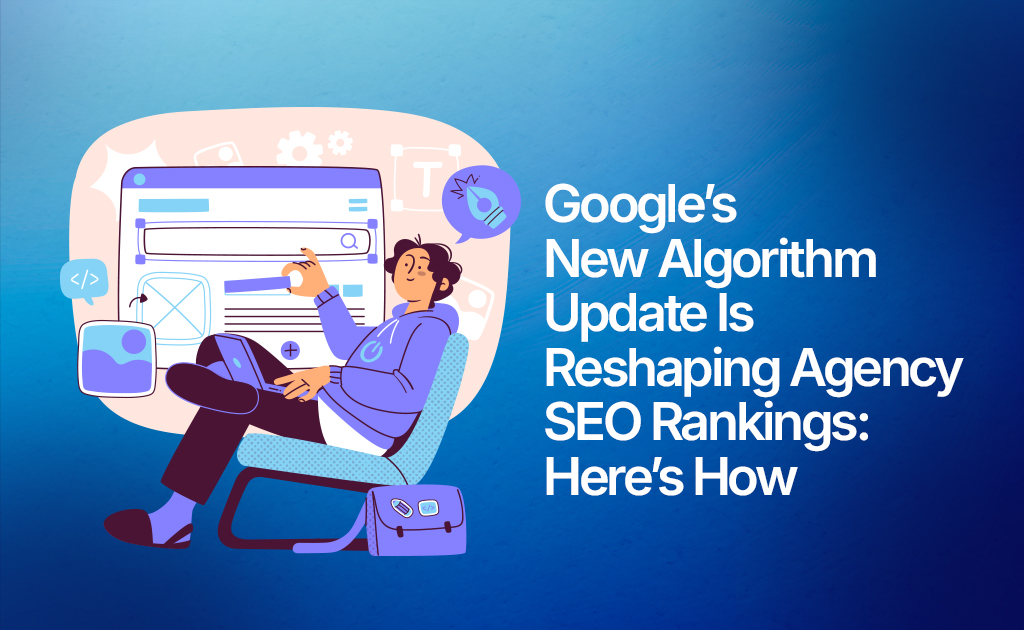
Google Algorithm Update changes are once again redefining how digital marketing agencies appear in search results. With the latest core update rolling into 2026, many agencies have noticed sudden ranking drops, traffic fluctuations, and shifts in keyword positions. This update is not just a technical tweak—it’s a quality-driven transformation that directly impacts how agencies showcase expertise, trust, and real-world value.
Understanding what has changed and how to adapt is crucial for agencies aiming to maintain visibility and authority in competitive markets.
Understanding the Latest Google Algorithm Update
The recent Google Algorithm Update focuses heavily on improving search result quality by prioritising genuine expertise, strong user experience, and accurate intent matching. Instead of rewarding pages that rely solely on keyword placement or backlinks, Google is now assessing how useful and trustworthy an agency’s content truly is.
For digital marketing agencies, this means rankings are no longer driven by claims alone. Google is analysing whether agencies demonstrate real experience, proven results, and meaningful engagement.
Why Agency Websites Are Most Affected
Digital marketing agencies operate in one of the most competitive online spaces. Keywords related to SEO, PPC, and digital growth are crowded, making Google more selective than ever.
Many agency websites lost rankings because of:
Generic service descriptions
Repetitive content across multiple locations
Overuse of AI-generated blogs without originality
Weak proof of real project experience
Agencies that fail to differentiate themselves clearly are being filtered out in favour of brands that show depth and credibility.
How Google Algorithm Update Changed Ranking Factors for Agencies
Google Algorithm Update and Content Quality Signals
The Google Algorithm Update has elevated content quality signals such as:
Clear service explanations
Industry-specific insights
Case studies and success stories
Transparent processes
Agencies publishing surface-level blogs or sales-focused landing pages without real value are now struggling to compete.
Search Intent Is Now a Deciding Factor
Google has refined how it understands search intent. Pages must now align perfectly with what users are searching for.
For example:
Informational searches expect guides and insights
Commercial searches expect proof, pricing context, and results
Local searches expect strong location relevance
Agencies mixing all three intents on one page are seeing ranking instability. Separating content by purpose is now essential for consistent growth.
The Impact on Local and Global Agency Visibility
Local and international agencies are both affected, but in different ways.
A Best digital marketing agency in Kochi now needs more than location keywords—it must show local market understanding, client testimonials, and regional expertise. Similarly, a Best digital marketing agency in Trivandrum benefits from content that reflects local business challenges and solutions.
At a broader level, agencies aiming to rank as the Best digital marketing agency in Kerala must establish authority across multiple service areas while maintaining consistency and trust signals.
For international competition, agencies targeting global clients—such as positioning as the Best digital marketing agency in Dubai—need strong branding, multilingual optimisation, and globally relevant case studies to stay competitive under the new ranking system.
AI Content: Accepted, But Only If It Adds Value
The Google Algorithm Update does not penalise AI-generated content outright. However, it strongly devalues content that:
Lacks originality
Repeats common SEO phrases
Offers no new insights
Agencies using AI responsibly—for research, structuring, and enhancement—are performing well. Those relying on AI to mass-produce generic blogs are seeing ranking declines.
User Experience Is No Longer Optional
Google is paying closer attention to how users interact with agency websites. Factors such as:
Page loading speed
Mobile responsiveness
Content readability
Clear navigation
now directly influence rankings. Agency websites with heavy animations, slow portfolios, or cluttered layouts are losing ground to faster, cleaner competitors.
How Agencies Can Adapt and Recover Rankings
To stay competitive after this Google Algorithm Update, agencies should focus on long-term authority rather than short-term SEO tactics.
Key actions include:
Updating service pages with real case studies
Creating topic clusters instead of random blogs
Improving local SEO signals and citations
Refreshing outdated or underperforming content
Strengthening brand credibility through consistency
Agencies that invest in quality over quantity are seeing gradual ranking recovery and improved engagement.
Final Thoughts
The latest Google Algorithm Update is reshaping agency SEO rankings by rewarding authenticity, expertise, and user-first experiences. It’s no longer enough to claim authority—Google wants proof.
Agencies that clearly communicate value, understand user intent, and build trust will not only recover but grow stronger in search results. Those who continue outdated practices may struggle to regain visibility in this evolving digital landscape.